I attended my first LA Tech Meetup on Friday, January 30, at Santa Monica Brewery with my classmate Christina. The meet-up was centered around socializing, networking, and having a good time. I met many people commuting from the Valley; I’d say there were slightly more men than women, and a large percentage of attendees were Middle Eastern or North African. Everyone was surprisingly sociable and friendly and genuinely a good conversationalist. Not once did I feel out of my element or experience “imposter syndrome”—no one asked me about my tech knowledge, experience, or schooling, which I had been dreading.
One conversation I found especially interesting was with a gentleman who is about to publish a product that could (theoretically) put the movie industry out of business in a split second—an AI movie codebase where users can write prompts for the movie they want to create. He explained that this matters because it makes moviemaking more accessible for people who have great stories but not the budget or sponsors to make them happen. Speaking of sponsors, it also overrides deceptive marketing where, as a trade-off, companies request that their products be featured in the film.
We talked about how movies from the 80s and 90s (Ferris Bueller’s Day Off, Pretty in Pink, The Breakfast Club, My Girl, etc.) felt more thoughtful and well-done compared to the “fast-fashion”-esque movie flops of today. I asked more about his role, and he shared that he personally created the code for the service and works with a small team that supports him. He mentioned something that stuck with me: even though his product exists entirely online, he misses opportunities to connect with people in person.
Now that I think about it, if his product really does take off the way he predicts, not only could people lose jobs, but movie-making would become a one-person show—or a team that communicates solely online. No more stops at craft services or end-credit blooper reels—the things that make us human. Ironically, he had deleted all his social media apps to connect with people more in real life, only to download them again to promote the launch of his product and everything that comes after it.
Another person I spoke to shared that he recently transitioned into web development after being laid off from his tech job. He explained that many major companies (like Amazon) have laid off hundreds of tech workers and that he’s struggled to obtain a new position despite applying to countless jobs. When he admitted this, I felt concerned—what does that mean for my future? It sounds like a societal nightmare for people just starting out to compete with those who have 3-4 years or more of experience. I was also confused because shouldn’t there be a plethora of openings with the constant rise of startups and AI technology? Since this is the future, you’d think there’d be more demand for people to keep the new machines and systems running.
I also had the pleasure of meeting the meetup administrator, Abdo, who was incredibly hospitable and made me feel welcome and taken care of. I told him I was new to tech, and he asked what I liked about it. I explained that coding feels like solving a puzzle—with clear parameters and systems that guide you into making logical decisions. I also shared that coding has felt surprisingly intuitive to me and that I enjoy the process of problem-solving and building something functional.
He smiled and advised me to concentrate on what I enjoy doing (which is virtually everything, but I chose to focus on coding). He mentioned that the “word on the street” is that we may experience a second dot-com boom—though this confused me, mostly because I’m still new to the tech world. Essentially, he suggested that a new form of the internet could emerge, and the one we currently rely on might eventually become obsolete. His advice was to avoid sinking years into a very specific field that may not exist in the same way in the future and instead look into machine learning—something with longevity.
He admitted that AI may eventually replace many tech jobs, but this approach felt like the lesser of two evils. He described machine learning as a miniature version of software development, without all the traditional schooling. He also explained that building your own AI systems could be valuable, since many companies rely on platforms like ChatGPT, which may not always be available or may come with ethical limitations that restrict usage. Being able to create your own AI platform would bypass those issues. That excited me—I like building things, I like longevity, and career-wise, that feels like a smart move.
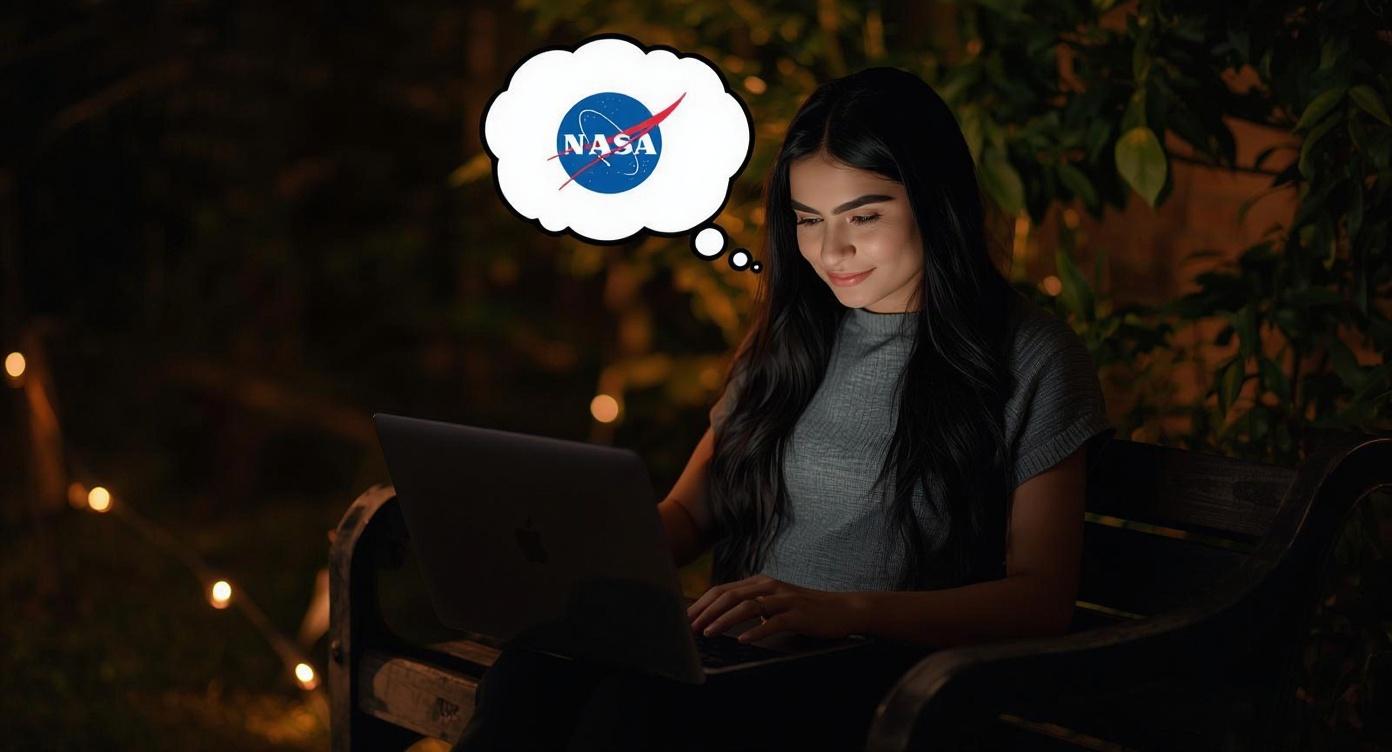
Another person listening to our conversation recommended quantum computing and coding (though she warned you need to be strong in physics, since quantum mechanics guide the models). Her story genuinely saddened me. She is a highly qualified coder whose work was used by NASA, yet she was denied admission to programs like Caltech and others. She was so appalled, disgusted, and angry that she revoked access to her code—even while NASA was reaching out to her for help with a Chinese satellite that had exploded near theirs.
She explained that the people in charge of admissions were two white Irish men, not even based in the U.S., who rejected her application. She implied racism played a role, and this was essentially her villain arc (my interpretation) after being treated so poorly despite her qualifications. She looked deeply upset, and I felt sympathy for her—how can someone so brilliant struggle this much to get into programs? She applied to 22 schools, and only two responded. It made me start to think that if you are not a white man in tech, work life can be incredibly difficult, and even getting into top programs—despite being more qualified than accepted candidates—is an uphill battle.
Abdo gently consoled her and suggested she tone it down for the event, saying they could discuss the atrocity of it all on a hike later. If he’s that aware, this must be a common, quiet stressor for many people in tech.
To wrap up my experience, I’d say it felt excellent. Someone even gave me their URL (which I don’t fully understand yet or know what to do with), but it made me feel accepted in the tech world. I will definitely attend more meet-ups in the near future. Hopefully by then, I’ll have more knowledge to understand the syntax people casually mention or what certain job titles actually entail. It’s not always clear; no one explicitly says they’re “QA,” even though they do QA-type work. I got the sense that most people do a little bit of everything in web development, from building foundations to debugging to leading meetings, and honestly, that made the field feel more human and approachable.